Understand how you see the game.
Short, guided drills for the visual skills baseball depends on. Optional, a few minutes at a time, as one part of your wider training.
Get Started
20/20 IsOnly the Start
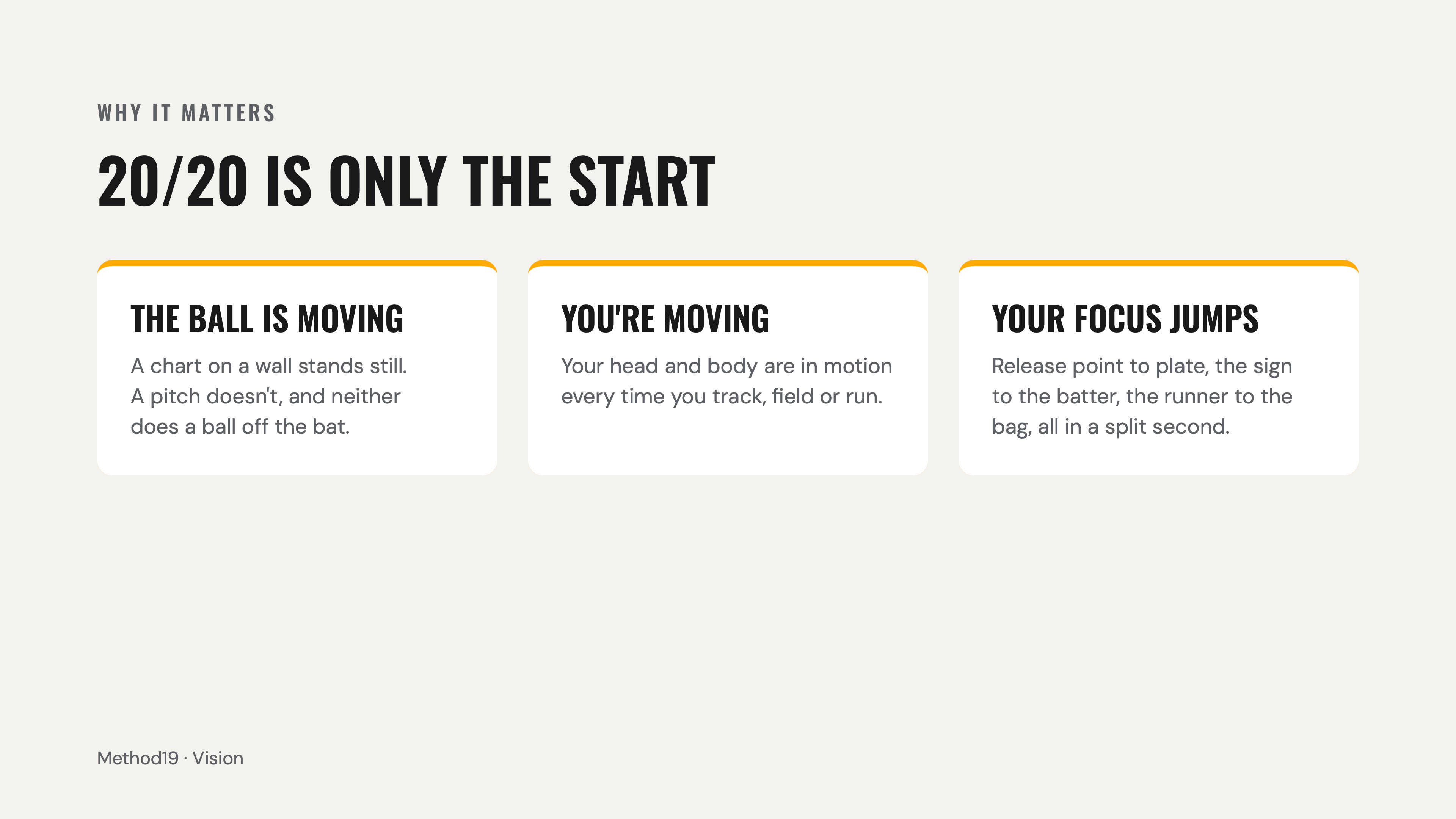
20/20 tells you how clearly you can read a still letter on a wall. Baseball asks a lot more of your eyes than that. The ball is moving. You're moving. Your focus jumps from the release point to the plate in a fraction of a second, and you need to know where the runners are without looking at them.
Most players never think about those skills, and most training programs don't cover them. Vision puts a few simple tools in reach, so you can understand how your eyes and body work together and try vision-specific drills if you want to.
Four Skillsthe Game Depends On
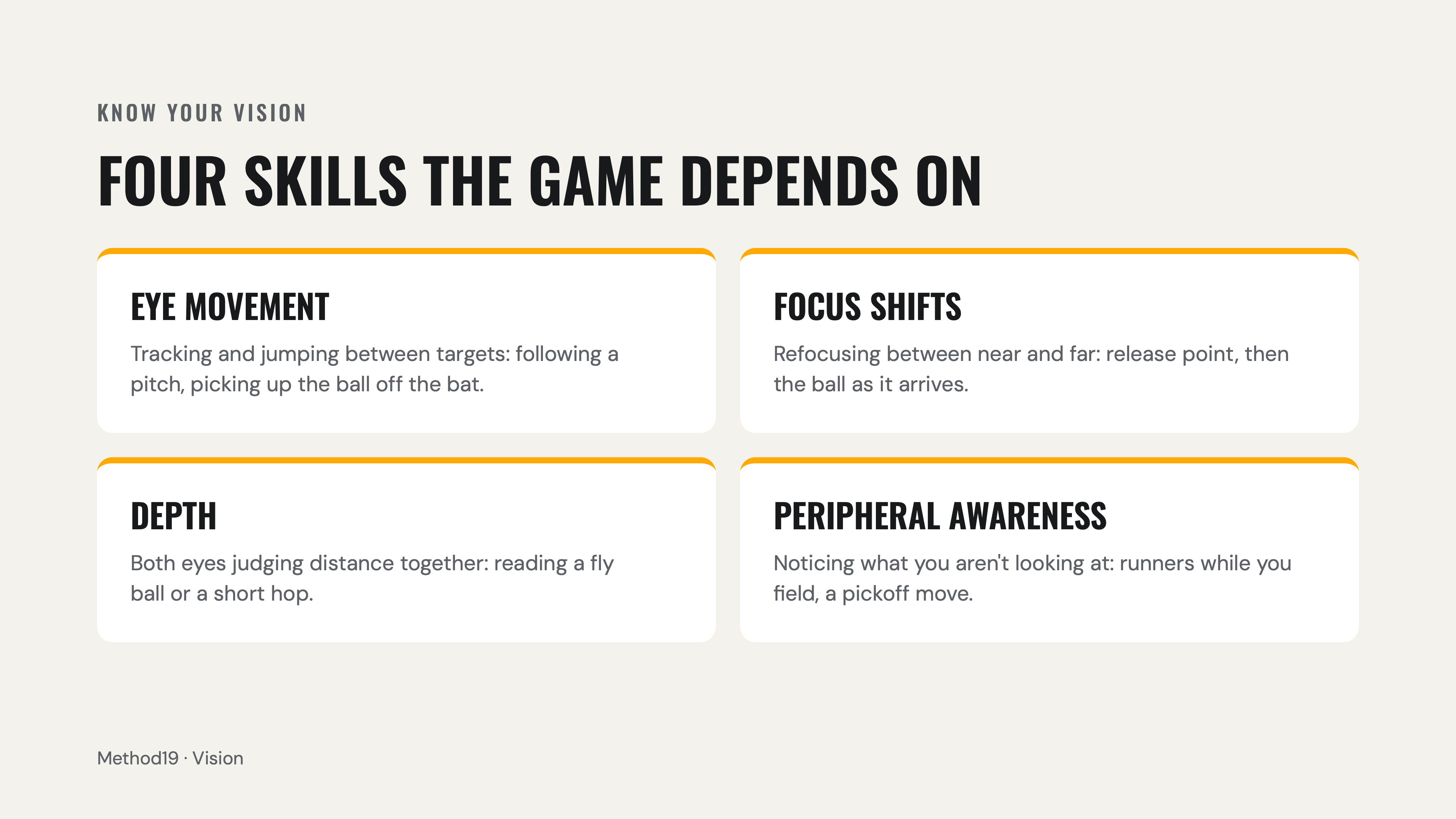
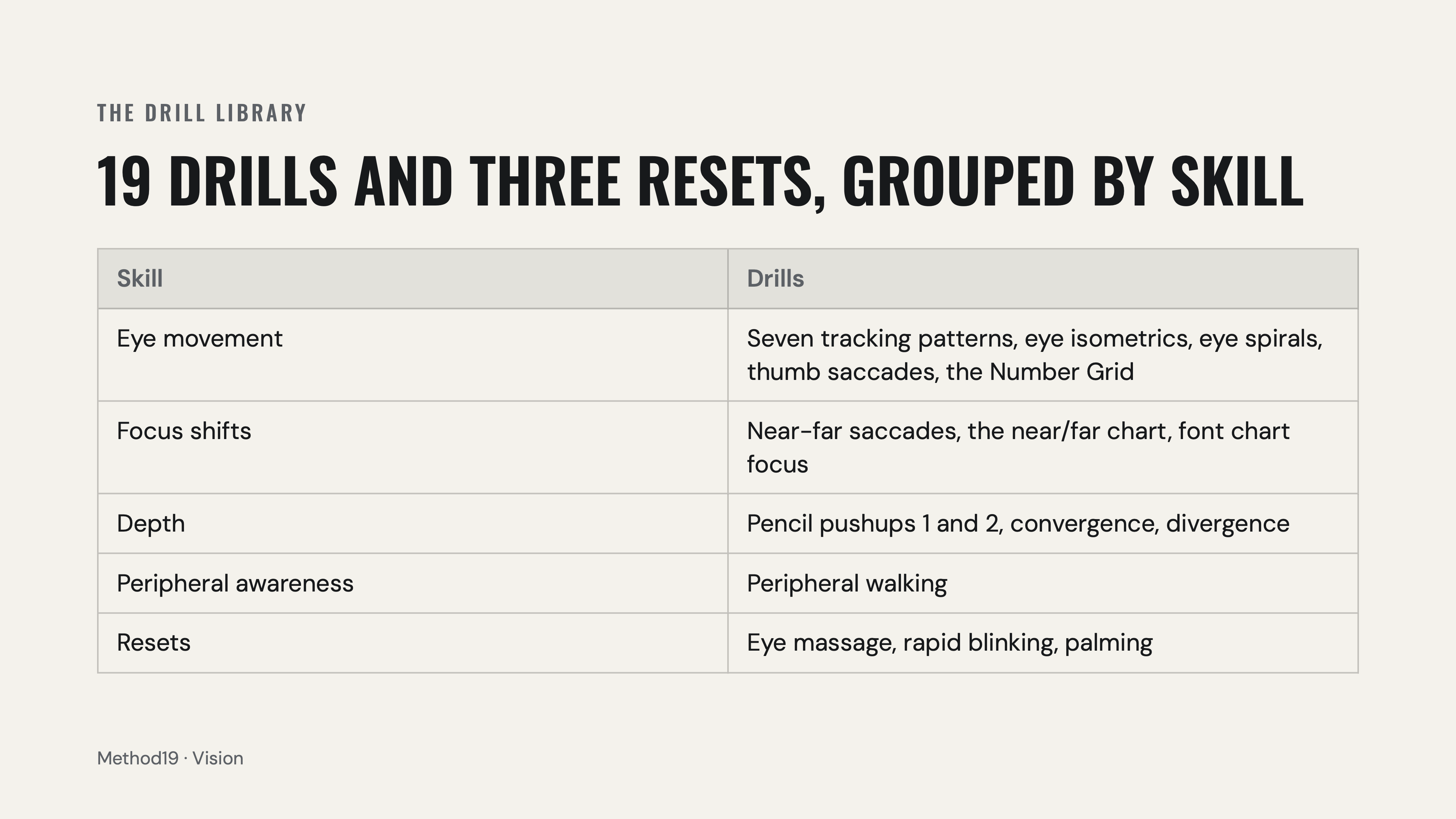
- Eye movement: how smoothly and accurately your eyes track and jump between targets. Following a pitch out of the hand; picking up the ball off the bat.
- Focus shifts: how quickly your eyes refocus between near and far. Picking up the release point, then the ball as it arrives.
- Depth: how well your two eyes work together to judge distance. Reading a fly ball or a short hop.
- Peripheral awareness: what you notice without looking straight at it. Runners while you field; a pickoff move.
How ItWorks
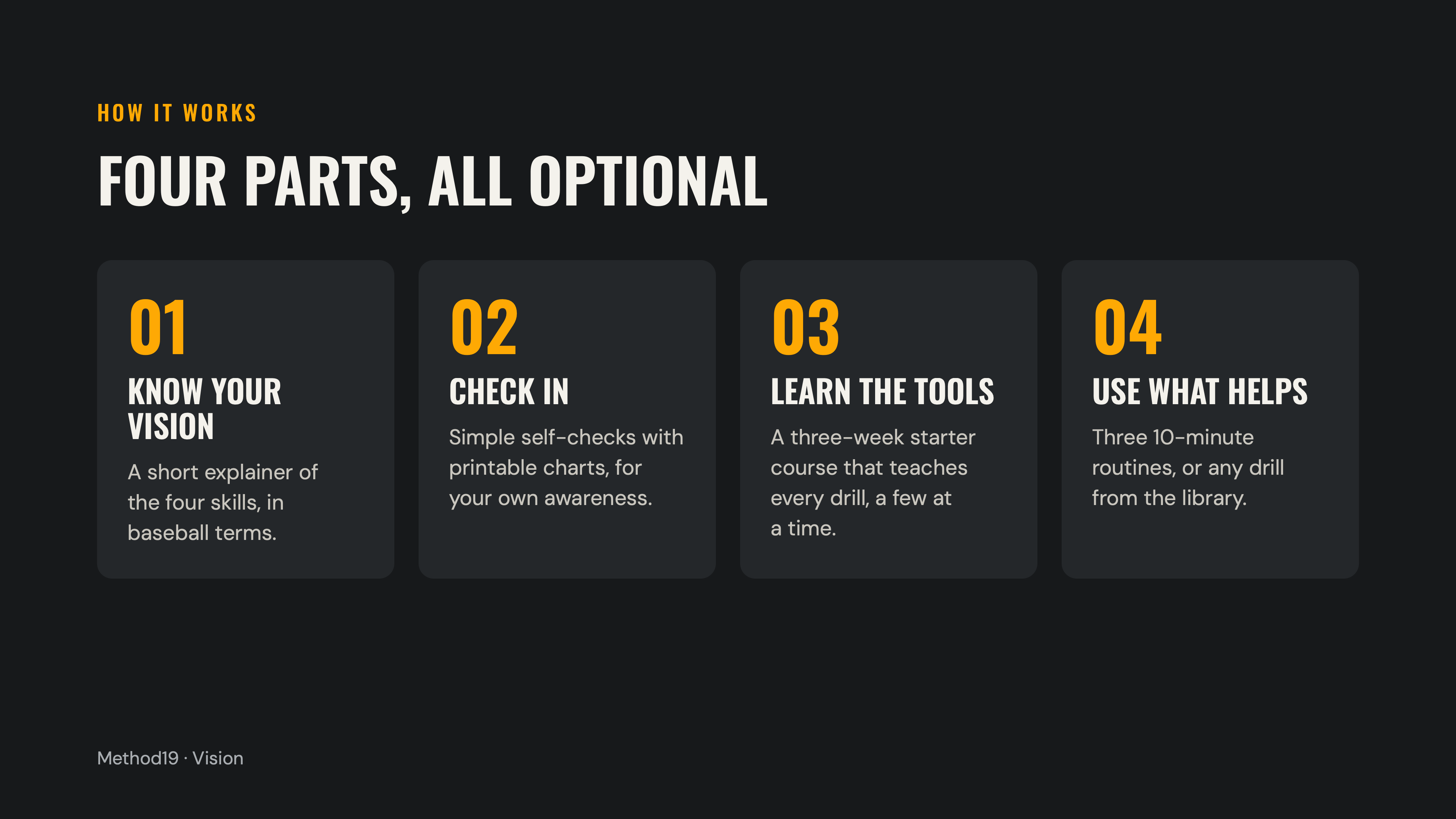
- 01
Know your vision.
A short explainer of the four skills, in baseball terms.
- 02
Check in, if you want.
Simple self-checks with printable charts, just for your own awareness. They aren't an eye exam.
- 03
Learn the tools.
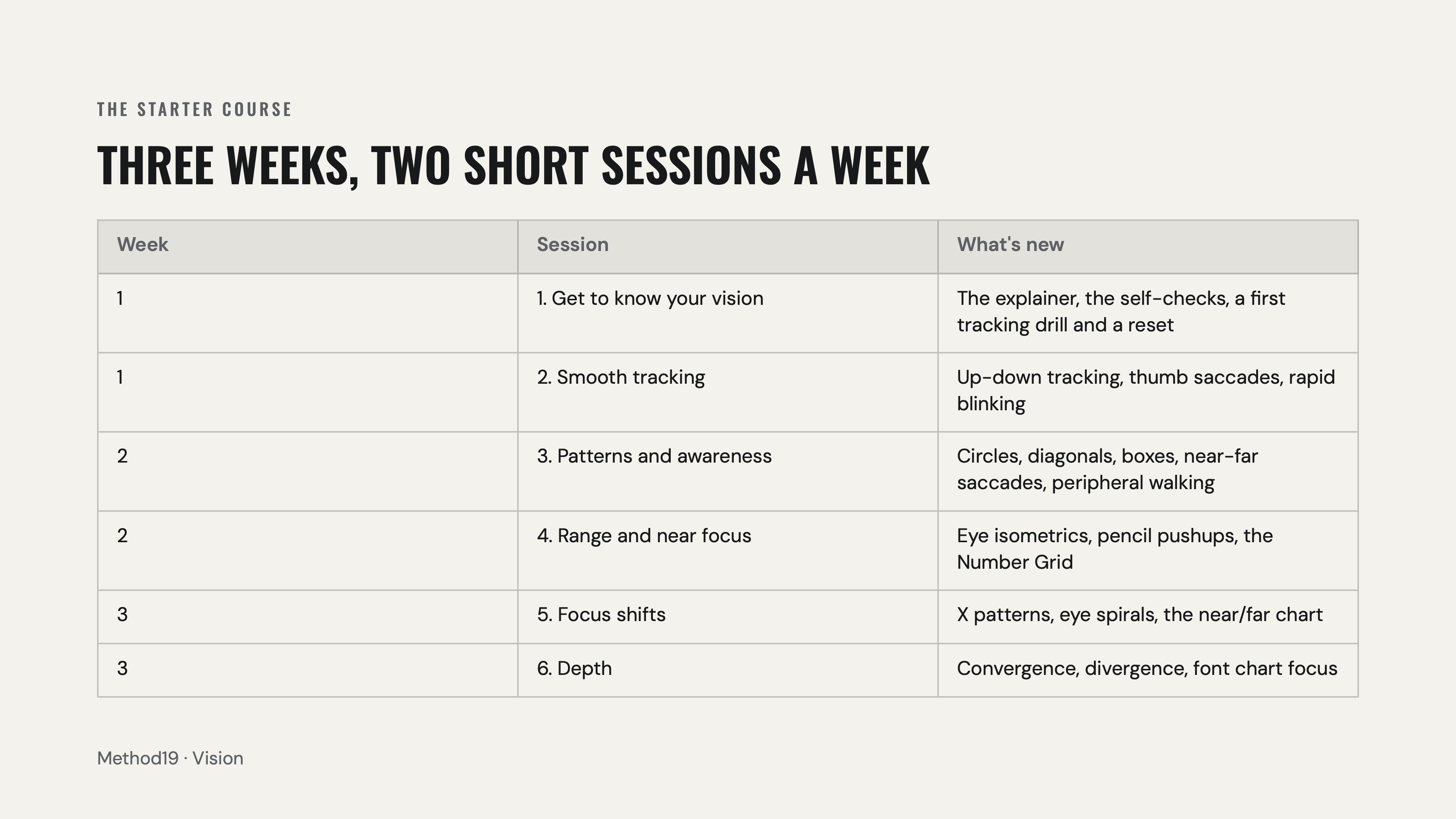
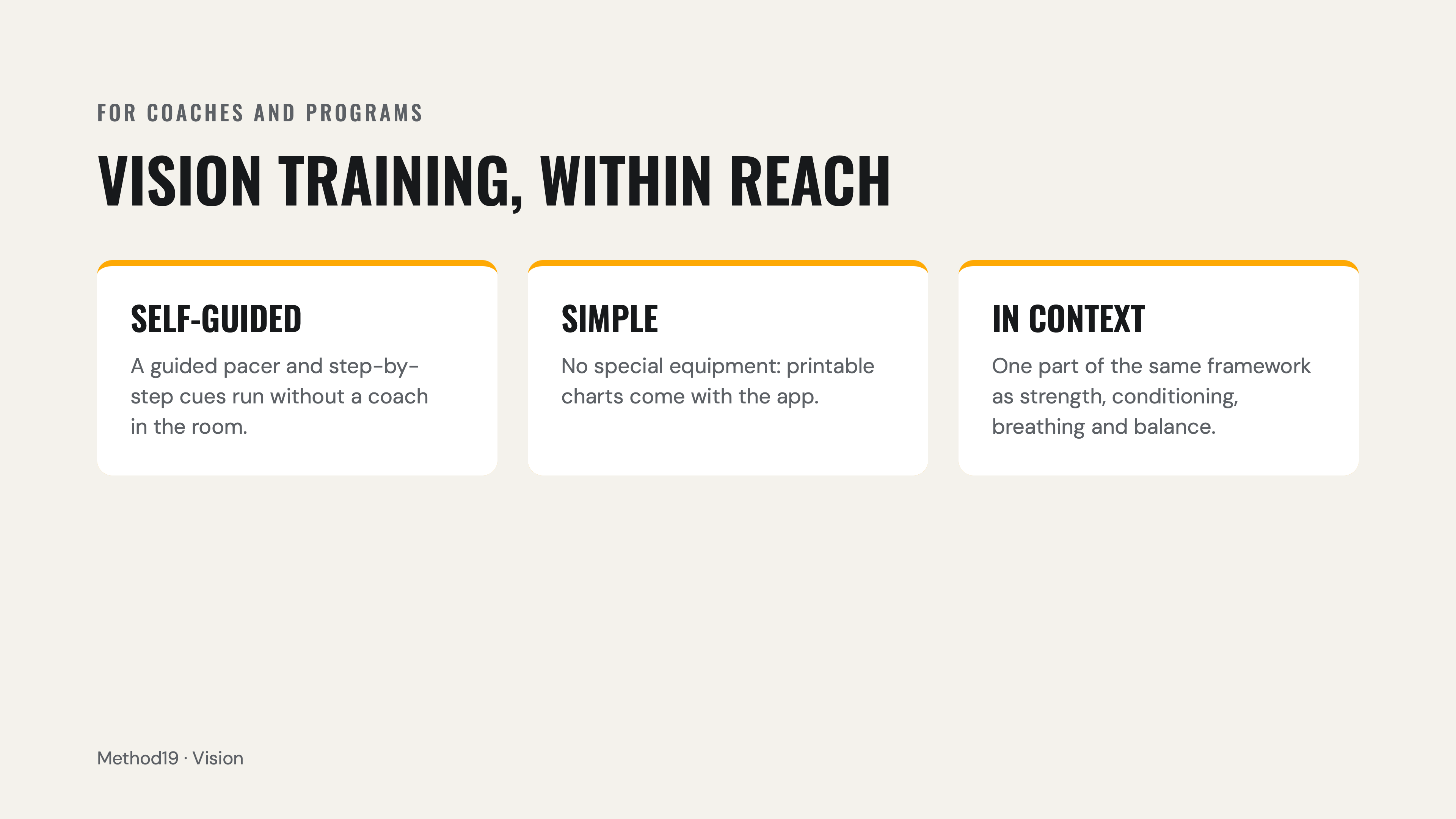
A three-week starter course, two short sessions a week, introduces every drill a few at a time. A guided pacer on screen shows you where to look.
- 04
Use what helps you.
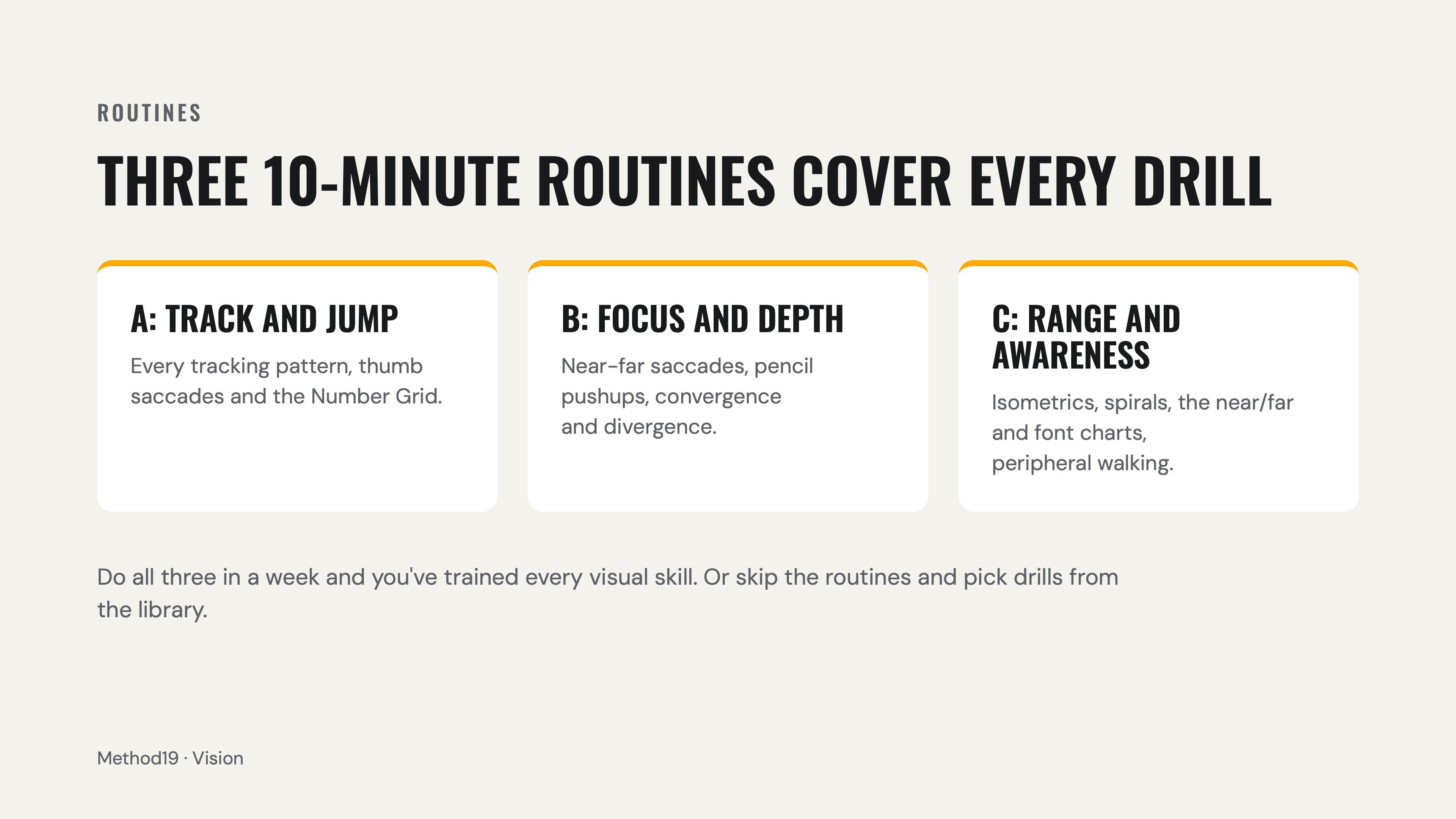
Three 10-minute routines cover every drill in a week, or pick the drills you like from the library. Quick resets relax your eyes after screen time, film or travel.
What YouNeed
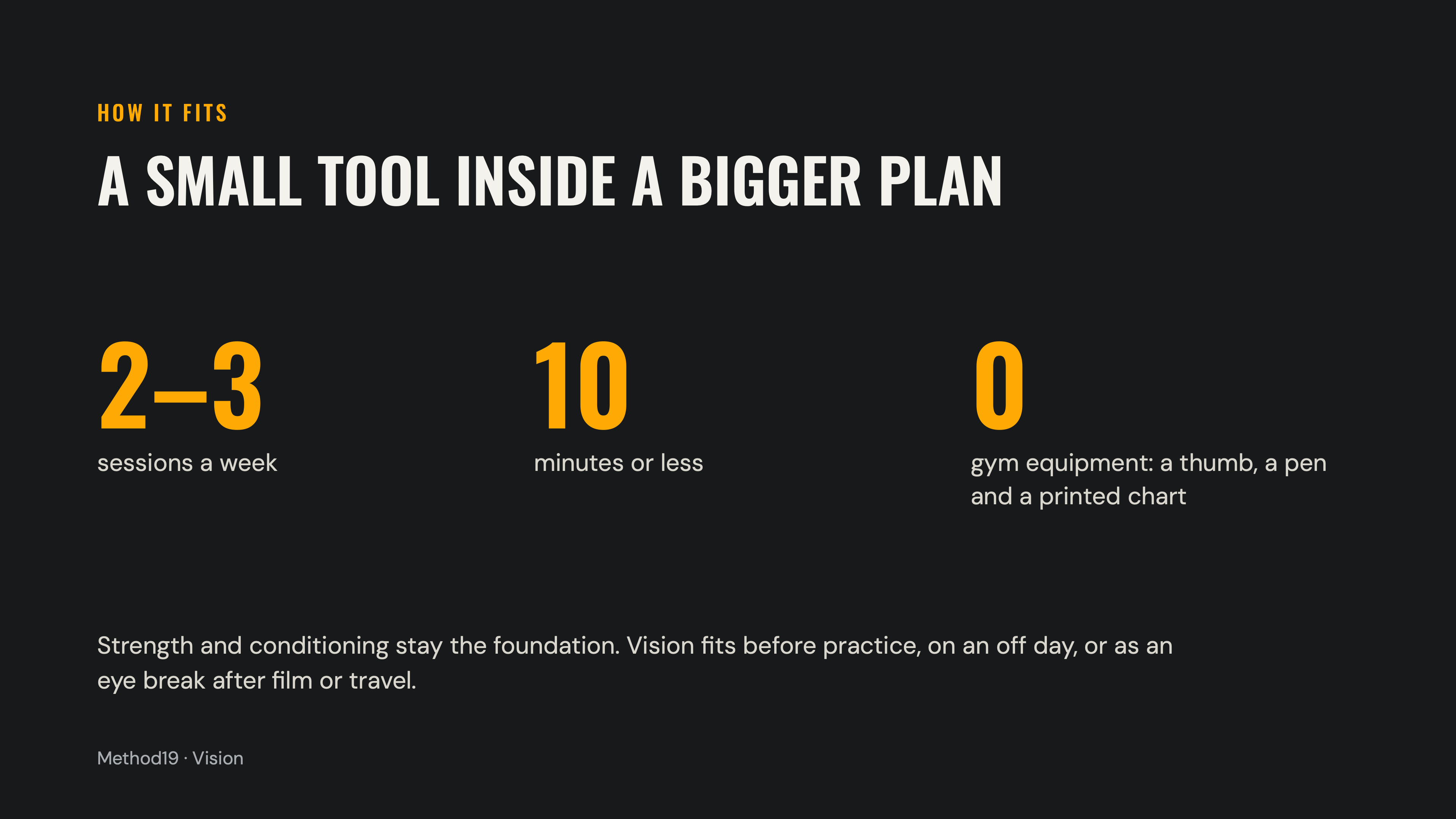
- 10 minutes or less, 2–3 times a week.
- Your thumb, a pen, and the printable charts from the app.
- A few steps of open space for one drill.
- Your glasses or contacts, worn as your eye doctor advises.
One Part ofthe Whole Plan
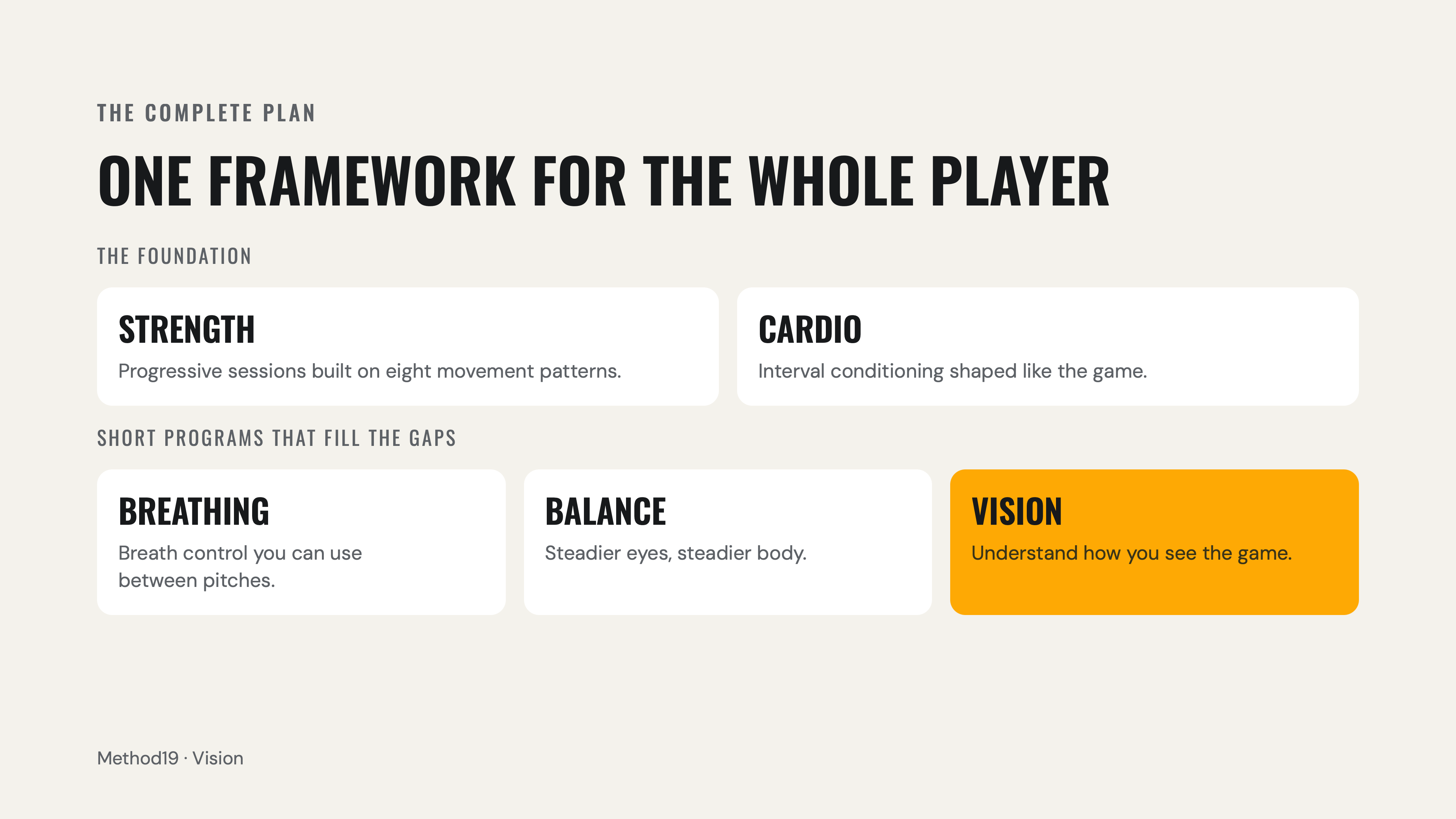
Vision is supplemental. Strength and conditioning remain the foundation of Method19, and Vision fits around them: a short session before practice, a routine on an off day, or an eye break after a long bus ride. It sits next to Breathing and Balance, which pairs especially well with Vision, so you train how you move, breathe and see, not just how much you can lift.
CommonQuestions
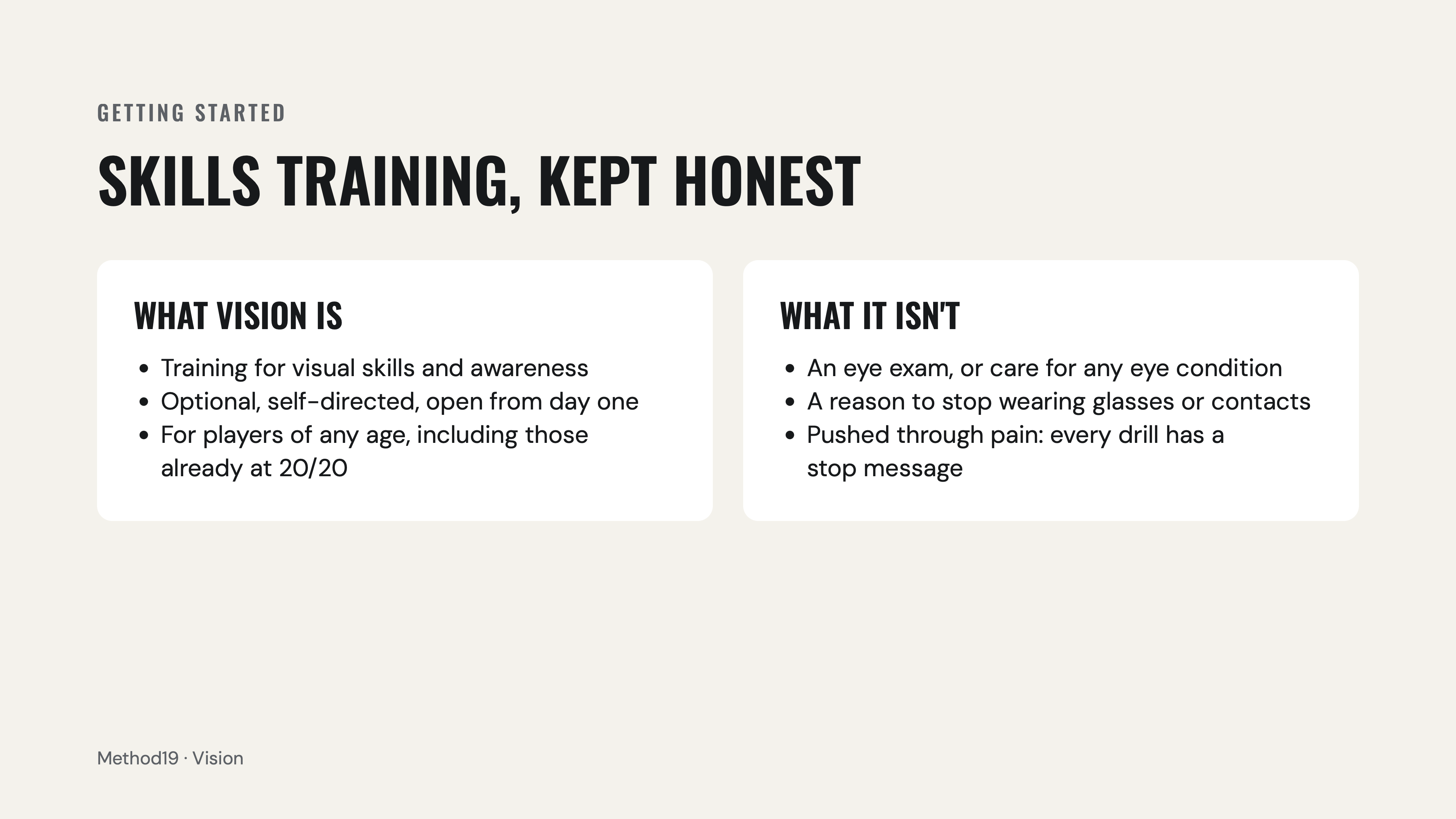
Vision trains visual skills and awareness. It doesn't diagnose, correct or replace care for any eye condition, and it isn't a substitute for an eye exam.